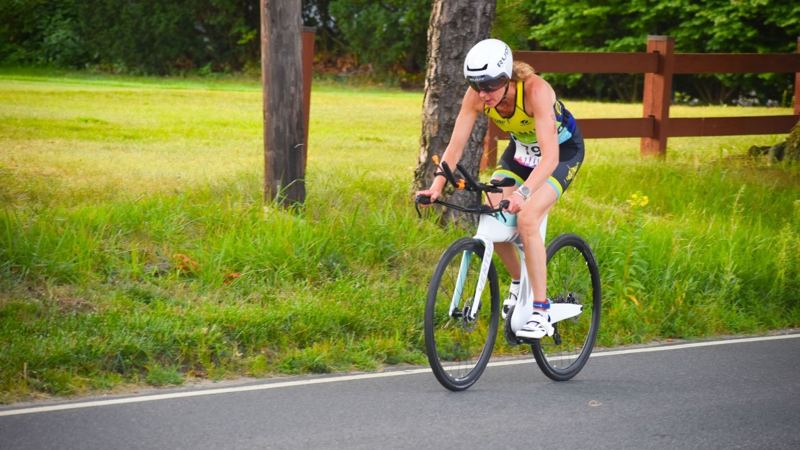

"Race who shows up."
That was Coach Holly Benner, ACC's advice before last Sunday's race.
And it turned out to be a pretty good lesson in performance.
I was the only woman who actually showed up on race day. 99% humidity with terrible storms predicted meant most people opted out, hit "Snooze," or headed out to brunch. This technically meant I had first place overall female locked up before the race even started.
Do you think that altered my race strategy?
C'mon....you've been reading these long enough to know me and know that it didn't. 🥵
First by default or knowing the outcome in advance wasn't the point. I raced the people who were there.
I didn't take it easy. I raced my heart out.
(And I wondered, red-faced and gasping for air as I turned for the final lap, what possessed me to go all-out instead of setting cruise-control?) That's probably for another newsletter.
I finished 3rd overall - behind two guys I've gotten to know through other races who run 5:30–5:40 miles (times I'll never see unless I'm in a car). Blistering.
There was another interesting data point: I was exactly 3/4 of a second faster this year than last year at this exact same event. At first glance, that might not sound like progress.
But that's the problem with looking at performance through a single number.
Consistency tells you something. Context tells you much more.
This year, the day before the race, I put my own bike hydration system together. 😬
Small thing. Big deal for me.
Straws, tubing, redoing handlebar tape, magnetic clasp, bite guard....
It worked fine at home....just NOT when I went to use it race morning: the flexi-straw had bent upward instead of down into the reservoir.
So instead of getting fluid, I got air bubbles.
Not exactly critical on a 13-mile ride. But in a half Ironman? Deadly. And maddening.
I eventually figured out what was wrong, fixed it at home, and learned something I wouldn't have known without actually using the system.
Which made me think about something we see constantly in our work at Exemplary Performance: Movement changes what you see.
You can have the right process. The right tools. The right training. The right technology. The right strategy.
And still have something fail when a real performer puts it into motion.
That's why we don't start by asking, "What training do people need?"
We start by asking: What does great performance actually look like?
Because the goal isn't to create something that looks good on paper. It's to understand performance well enough to make it repeatable.
Sometimes the most valuable learning isn't discovered in the planning.